
Tank to Tankless Conversion in Tampa: What Changes
Published 2026-10-02 · Mr Water Heater Team · Florida Master Plumber Licence CFC1433539.
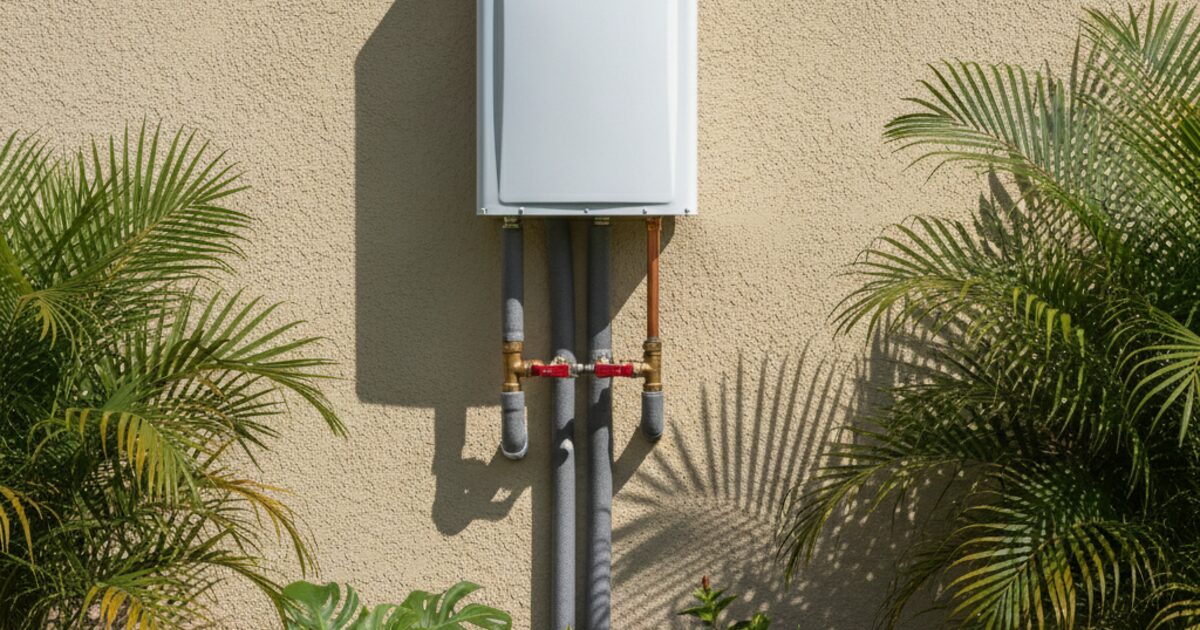
Converting from a tank to a tankless water heater in Tampa usually means upgrading the fuel supply, not just swapping the appliance: a gas tankless unit often needs a larger gas line and new venting, and an electric one often needs heavy dedicated circuits and panel capacity. The conversion also adds a condensate drain on condensing gas models and service valves for the descaling Tampa's hard water makes necessary.
Converting from a tank to a tankless water heater in Tampa usually means upgrading the fuel supply, not just swapping the appliance: a gas tankless unit often needs a larger gas line and new venting, and an electric one often needs heavy dedicated circuits and panel capacity. The conversion also adds a condensate drain on condensing gas models and service valves for the descaling Tampa's hard water makes necessary.
If you have already decided tankless is right for your home, this guide covers what the upgrade physically involves. If you are still deciding, start with whether a tankless water heater is worth it in Tampa.
Why a conversion is more than a swap
A storage tank heats water slowly and keeps it hot. A tankless unit heats water only while a tap is open, so it has to deliver all of that heat in the moment. That is why tankless models are sized differently. As ENERGY STAR's technical bulletin on demand water heaters puts it, tank capacity "is based on the number of gallons that fit in the tank," while "tankless models are rated by how many gallons of hot water they produce per minute (GPM)."
Heating water on demand takes a lot of energy at once. The gas line, vent or electrical circuit that fed your old tank was sized for a slower job, and it often cannot feed a tankless unit without changes. Most of the work in a conversion is right there.
Gas conversions: supply line and venting
For a gas tankless water heater, two things usually change.
The gas supply. A tankless burner draws far more gas at full fire than a typical tank burner. The existing line from the meter may be too small or too long to deliver that volume while other gas appliances are running. The plumber checks the line size, length and the other appliances on it, and the meter's capacity, before choosing a unit.
The venting. Old atmospheric tank vents are not reused for most tankless units. Non-condensing models need a vent rated for them. Condensing models run cooler exhaust and typically vent through plastic pipe, which often allows a shorter, more flexible route through a wall.
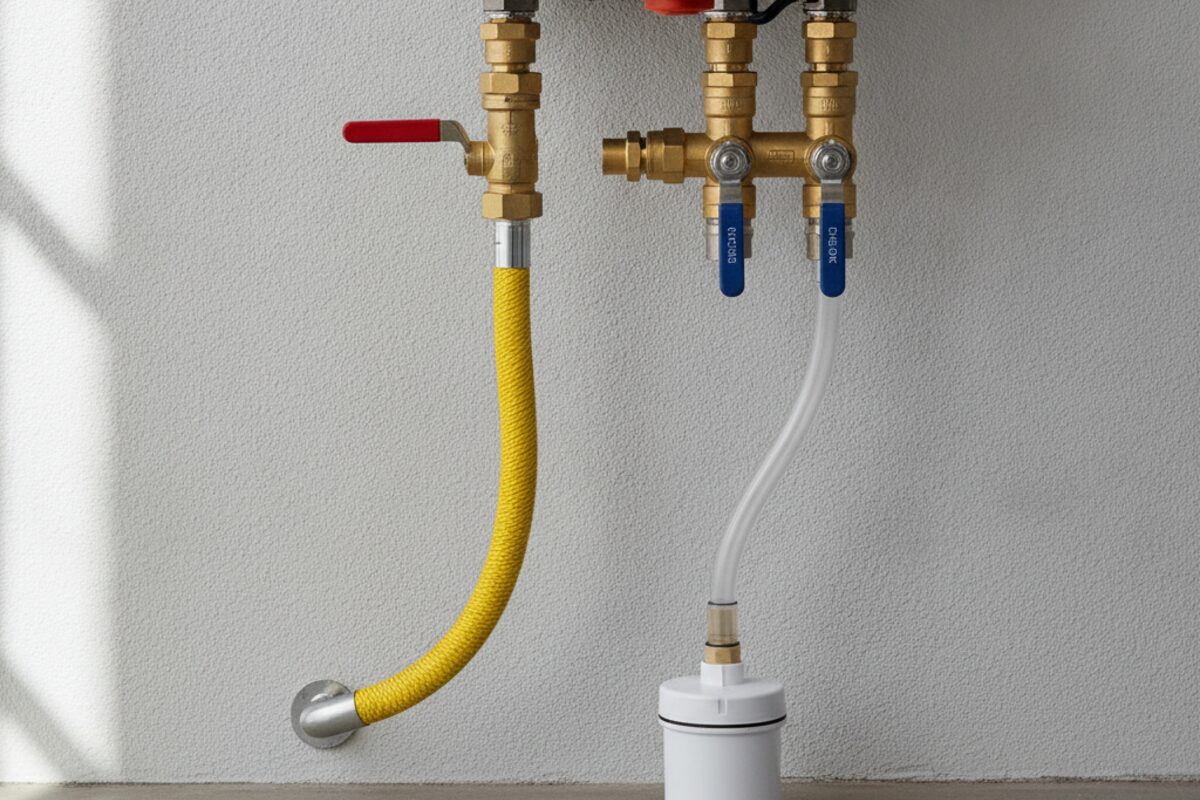
Condensate. Condensing units produce acidic condensate that needs a drain route, and often a neutralizer, planned in from the start.
Electric conversions: circuits and panel capacity
Electric tankless water heaters avoid gas lines and venting, but they move the challenge to the electrical panel. Whole-home electric units commonly need more than one large dedicated circuit, and the panel and service coming into the house must have room for that load.
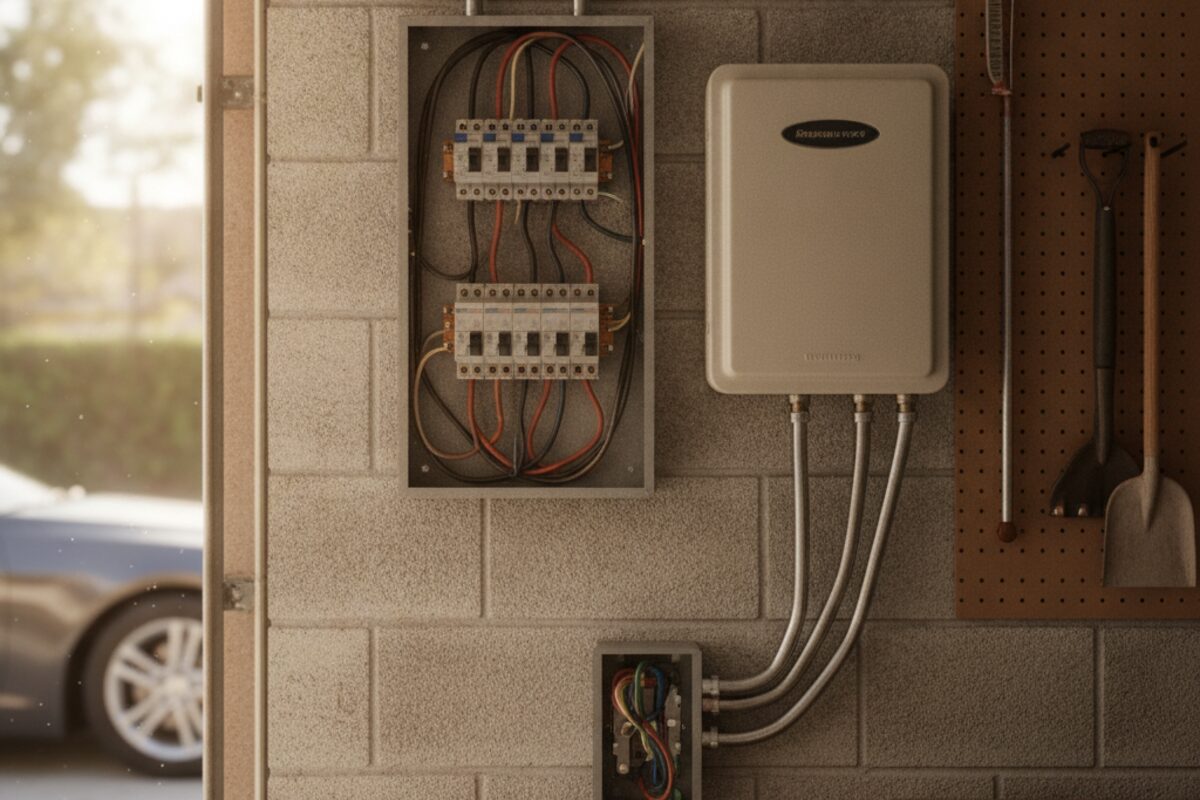
Before an electric conversion, the existing service is reviewed rather than assumed to be adequate. In some homes the upgrade is simple. In others, the electrical work outweighs the benefit, and a new tank or a gas unit is the better call.
Location: where the new unit goes
Tankless units are wall-mounted and compact, which opens up options a tank never had. In Tampa Bay homes they are often mounted:
- In the garage, near the old tank location, reusing some of the water piping
- On an exterior wall, using an outdoor-rated model, which frees up the closet or garage floor entirely
- In a utility closet, where venting and clearances allow
Location affects gas line length, vent route, condensate disposal and how far hot water travels to the farthest fixture. ENERGY STAR notes that the longer that distance, "the longer the wait time to reach the desired temperature," so a central location helps.
Service valves for Tampa's hard water
Tampa's water is hard, and scale builds up inside a tankless heat exchanger over time. Every conversion should include isolation service valves on the hot and cold lines so the unit can be flushed without cutting pipe. Our guide on whether you need a water softener in Tampa covers the local hardness numbers.
Plan for periodic descaling through water heater maintenance. It is part of owning a tankless unit here.
What the conversion day looks like
- Assessment and sizing. Peak demand, fixtures running together, fuel or electrical capacity, venting route and location.
- Remove the old tank. Drain, disconnect and haul it away.
- Supply work. Upsize the gas line or run the new circuits.
- Mount and connect. Water lines with service valves, venting, condensate drain.
- Commission. Purge, start, check for leaks, confirm temperature and flow, and walk you through the controls and maintenance.
ENERGY STAR puts the life expectancy of demand water heaters at 20 years, "much longer than that of conventional storage water heaters," which is part of why getting the conversion right the first time pays off.
Planning a tankless conversion in Tampa
Mr Water Heater handles tankless water heater installation in Tampa, including tank-to-tankless conversions across Carrollwood, Odessa, Wesley Chapel, Land O' Lakes and the rest of West Central Florida. Mark Lowrie holds Florida Master Plumber Licence CFC1433539, and the team is licensed and insured. If the conversion work would outweigh the benefit, we will say so and plan a straightforward tank water heater replacement instead.
Call Mr Water Heater at +1 727 203 8201 or contact Mr Water Heater to start your tankless assessment.